
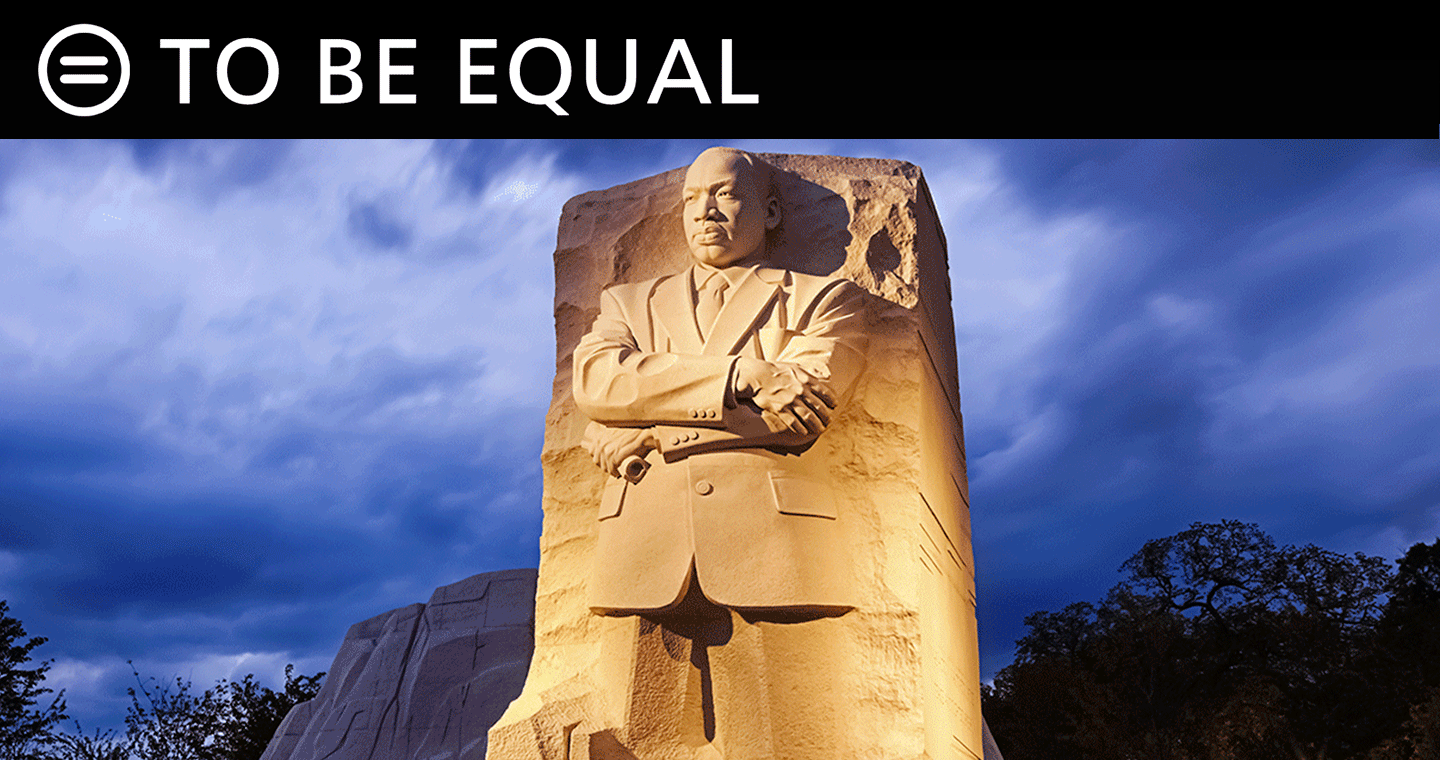
Long An Occasion For Pride And Celebration, MLK Day Now Is An Urgent Call To Action Against The Rollback Of Racial Justice And Equal Opportunity
Marc H. Morial
President and CEO
National Urban League
“Loose and easy language about equality, resonant resolutions about brotherhood fall pleasantly on the ear, but for the Negro there is a credibility gap he cannot overlook. He remembers that with each modest advance the white population promptly raises the argument that the Negro has come far enough. Each step forward accents an ever-present tendency to backlash.” – Martin Luther King, Jr.
When he signed the legislation that made the birthday of Martin Luther King, Jr., a legal public holiday in 1983, President Ronald Reagan called the Civil Rights Movement a “just cause,” and said “as a democratic people, we can take pride in the knowledge that we Americans recognized a grave injustice and took action to correct it.”
When he signed the legislation linking the holiday to national community service in 1994, President Bill Clinton said “[King’s] vision was so great, his moral purpose was so strong that he made us believe that we could be better than we are and that someday we would be able to walk hand in hand together into a brighter tomorrow.’
Last week, President Donald Trump complained that the movement to create equal opportunity for Americans of color had made life harder for white people.
For more than four decades, MLK Day has been an occasion of national pride – an opportunity to celebrate the progress the nation has made in overcoming racial prejudice and discrimination, expanding opportunity. This year it feels more like a dire warning and an urgent call to action against the radical rollback of racial justice and equal opportunity under the Trump administration.
On Thursday, the National Urban League will reconvene the Demand Diversity Roundtable, bringing together a broad, cross-sector table of national leaders to assess the moment and chart a path forward. We launched the Roundtable in January 2025 in response to an unprecedented wave of federal actions targeting diversity, equity, and inclusion across government, the workforce, and public life. One year later, these attacks have intensified, but so has the response, with an expanded group of civil and human rights organizations, civic engagement leaders, faith voices, business and economic institutions, media, academic leaders, and democracy partners joining the table.
The event will stream live on NUL.org, and @naturbanleague on Facebook & YouTube.
Far from seeking to eliminate what President Reagan called “traces of bigotry” that “still mar America,” from day one the Trump administration sought to dismantle 60 years of progress, subverting civil rights laws to entrench and reinforce historical inequities.
The administration has eliminated diversity, equity, and inclusion offices and policies across the federal government, strong-armed universities and corporations to dismantle their own equity programs, encouraged “reverse discrimination” complaints and altered EEOC enforcement to prioritize claims by majority‑group individuals.
The truth is that white males are admitted to colleges at higher rates than every other group. White job applicants are more likely to be granted interviews. White people have an employment advantage at every level of educational attainment. White men are paid more. They are overrepresented in executive and management positions. According to one study, it will take 22 years for white women and 48 years for women of color to achieve parity in corporate senior leadership roles.
There simply is no evidence of “reverse discrimination” against white men. Perhaps for some, a level playing field feels like an uphill climb.
This MLK Day, politicians who support anti-equity policies and oppose racial justice will twist Dr. King’s words to justify their actions, as though judging people “by the content of their character” instead of “the color of their skin” means ignoring inequality.
Dr. King didn’t advocate for a “color-blind” society, but one where diversity is cherished and embraced. The National Urban League and our partners in the Demand Diversity Roundtable remain committed to his vision.
###
2TBE 1/17/26 ▪ 117 W. 125th Street ▪ New York, NY 10027 ▪ (212) 558-5300
Connect with the National Urban League
Instagram: https://www.instagram.com/naturbanleague
Facebook: https://www.facebook.com/NatUrbanLeague
Threads: https://www.threads.net/@naturbanleague
YouTube: http://bit.ly/YTSubNUL
Newsletter: http://bit.ly/SubscribeNUL
Website: https://www.nul.org