

Knicks Fever Joins A Legacy Of Sports Championships That Healed Our Nation
Marc H. Morial
President and CEO
National Urban League
"As long as we're unified and doing our best to play our game, we believe no one in the world can beat us."
- Karl-Anthony Towns, the Knicks' Finals MVP
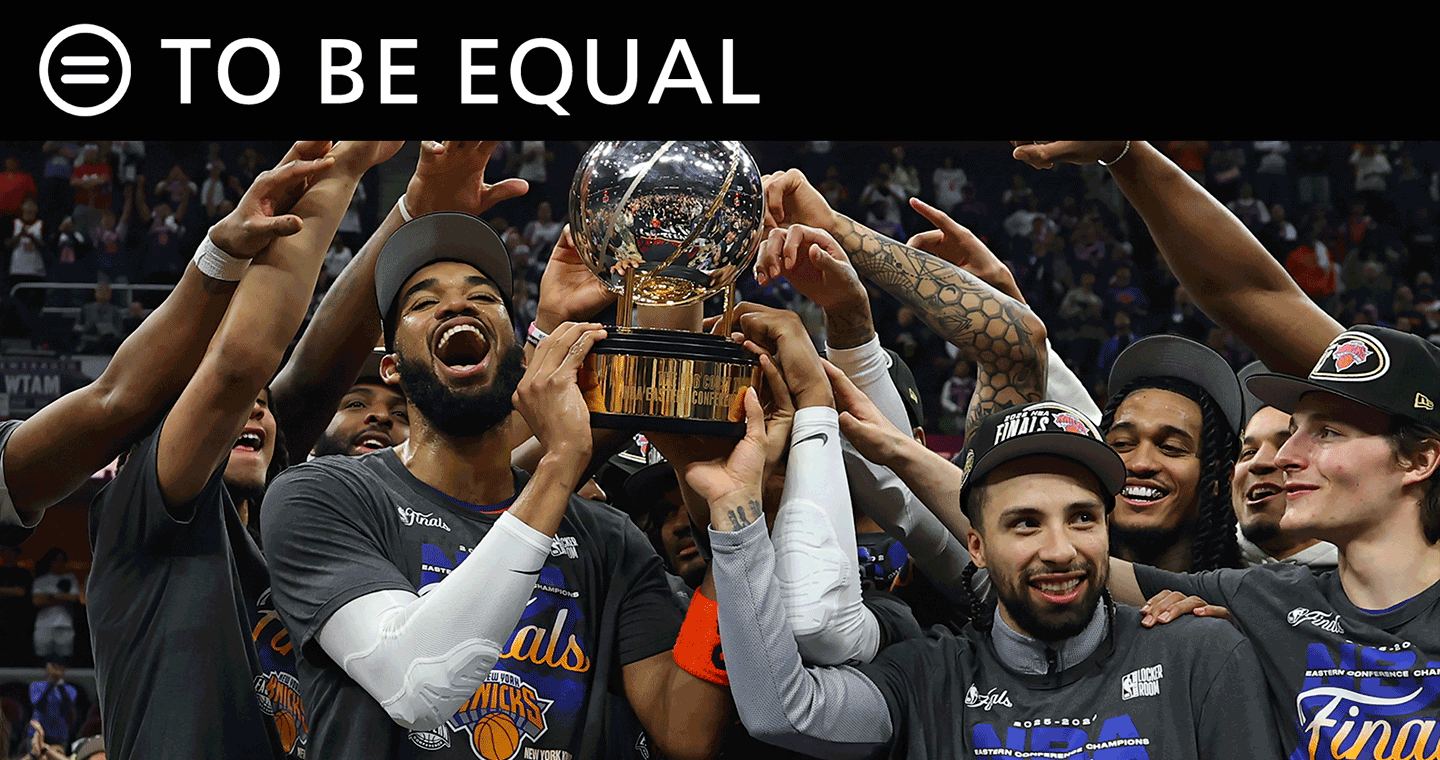
This year’s NBA Finals sparked a kind of excitement that many of us haven’t experienced since before the pandemic. The excitement from Die-hard Knicks day ones to passive fans was as unavoidable as it was contagious. Royal Blue and Orange filled airports, sports bars, TV screens, and our social feeds for 10 days of the five-game series.
And the energy of the Finals couldn’t have arrived at a more needed moment. The weeks and months leading up to the Game 5 win on June 13th have been riddled with images of war, skyrocketing gas prices, and political turmoil that left many of us disengaged and, at times, helplessly overwhelmed. Then, for the first time since 1973, the Knicks reached the NBA Finals.
Strangers embraced on Fulton Street in Brooklyn. People climbed atop city buses. A woman from Boston admitted, sheepishly, that she had been swept up in it. Matthew McConaughey, a proud Texan who had rooted against them, offered his congratulations from across the aisle with a phrase that stopped me cold: "America's more fun when New York's happy."
Whether you’re a team Spurs or not a fan of New York at all, you can’t deny the unifying power of Sports and the collective experience of rooting for the underdog achieving greatness against all odds.
For too long, we have forgotten what it feels like to want the same thing at the same time. And sports, at their best, have reminded us of that throughout history.
In 1969, America was burning. The Vietnam War was tearing the country apart. Cities still bore the scars of riots. And Americans were still reeling from high-profile assassinations of Civil Rights leaders and a sitting U.S. President.
Into that chaos walked the Miracle Mets, a team so improbable the gamblers gave them 100-to-1 odds, and they won the World Series anyway. For a city of Archie Bunkers, immigrants, and Black people who had come north looking for something better, the Mets sent a message: together, we can all win.
Long before that, in 1947, a 28-year-old man from Cairo, Georgia, put on a Brooklyn Dodgers uniform and walked onto Ebbets Field. What Jackie Robinson did that year transcended sports. He forced Americans, Black and white, to watch a Black man perform at the highest level, week after week, in a sport they loved. You could hate integration in the abstract. It was harder to hate it when you needed him to win.
Sports did not solve segregation. But Jackie Robinson gave the cause of equality a face and a box score, and neither could be argued away.
I am not suggesting that a championship erases what divides us. We should not underestimate what a city looks like when it decides to want something together.
Unified cities move us forward. They build better schools and elect better leaders. They are harder to abandon, harder to ignore, and harder to write off.
The Knicks gave New York a night and reminded all of us that the job now is to hold onto the feeling and ask what else becomes possible when we stop performing our divisions long enough to remember what we share.
The ball is in our court.
###
24TBE 6/20/26 ▪ 117 W. 125th Street ▪ New York, NY 10027 ▪ (212) 558-5300
Connect with the National Urban League
Instagram: https://www.instagram.com/naturbanleague
Facebook: https://www.facebook.com/NatUrbanLeague
Threads: https://www.threads.net/@naturbanleague
YouTube: http://bit.ly/YTSubNUL
Newsletter: http://bit.ly/SubscribeNUL
Website: https://www.nul.org