

Urban League Has Ambitious Development Plans
“At a time when it’s easy to take a step back, the Urban League is stepping up.”
Those were the words of Springfield Urban League (Springfield, IL) President and CEO Dr. Marcus Johnson during a Dec. 2 Springfield City Council meeting. Johnson was trying to convince the alderpersons to sell eight city-owned parcels of land on Springfield’s east side for $4,000 to the Urban League for future revitalization.
The City Council tabled the matter that night because the request took many by surprise, including two of the aldermen who represent the area. But the land purchase was approved unanimously by the City Council several weeks later, and now the Urban League is moving forward with an ambitious plan to determine what the community wants to happen with those eight lots plus other Urban League-owned properties in the area. Once those desires are determined, Johnson said work will begin to make things happen.
“We are the architects of our own revitalization, and we have matched our vision with our resources,” Johnson told the City Council. “I don’t think I have to convince anybody here of the potential in Springfield.”
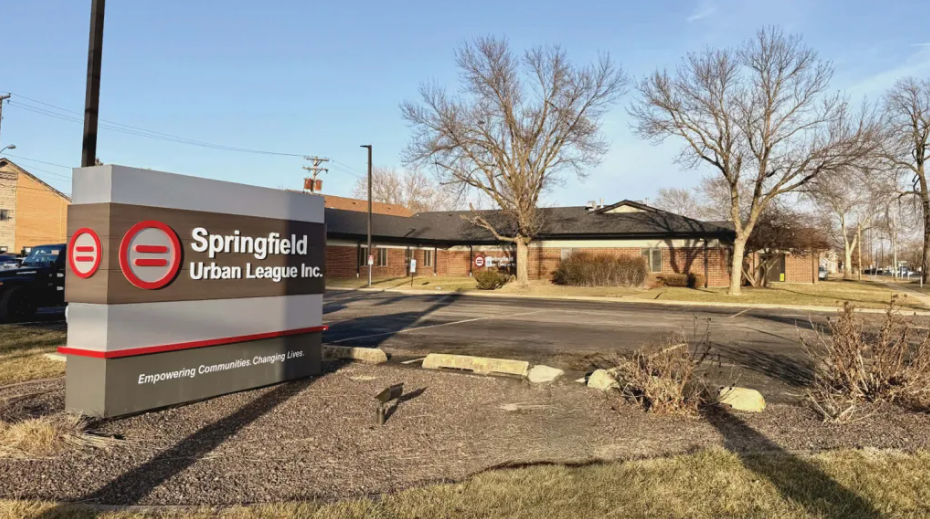
The eight newly acquired properties plus 11 additional vacant lots the Urban League already owns will anchor an urban initiative in the Central East Cultural District within the 50 contiguous blocks around the organization’s headquarters at 100 N. 11th St.
“The eight lots are intended to be a catalyst for affordable home ownership, cultural tourism and community-serving spaces that support the Central East Cultural District and help stabilize this historic Black neighborhood,” Johnson said. “These lots also sit within a broader vision that links the Urban League with Route History, Lincoln Colored Home, the Black firehouse and the new transportation hub, creating a walkable story of Black resilience and innovation in Springfield.”
Johnson expects funding to come from a mix of public and private sources, including grants, philanthropic support and the Urban League’s own reserves. Because the final mix of housing, cultural and community spaces is being driven by ongoing planning and survey data, Johnson said the Urban League will develop cost estimates “once those program decisions are clear, instead of guessing and risking misinformation.”
Other partners that Johnson listed for the Urban League development include Route History, neighborhood associations, local businesses and elected officials. Route History helped to develop the Imagine Route History Experience on East Cook Street and the Lincoln Colored Home at 427 S. 12th Street as major cultural destinations.
“Each partner plays a specific role, from lifting up resident voices to advancing preservation projects and aligning local, state and federal resources so that the neighborhood truly benefits from investment,” Johnson said. “With that being said, if we go against the community as a trusted messenger of 99 years, that goes against who we are. We would never work against the community.”
The Springfield Urban League will celebrate its 100th anniversary this year. Since opening its doors in 1926, the organization has worked to advance equity through programs in education, workforce development, health, justice and community empowerment. The Springfield Urban League supports more than 23,000 individuals each year in local neighborhoods through skill-building programs, digital education, economic development efforts, wellness resources and youth-focused services.
To read the full story, click here.