

A Power Grab That Silences Black Voters
Marc H. Morial
President and CEO
National Urban League
“For it is not enough just to give men rights. They must be able to use those rights in their personal pursuit of happiness. The wounds and the weaknesses, the outward walls and the inward scars which diminish achievement are the work of American society. We must all now help to end them--help to end them through expanding programs already devised and through new ones to search out and forever end the special handicaps of those who are black in a Nation that happens to be mostly white.” – President Lyndon B. Johnson, on signing the Voting Rights Act
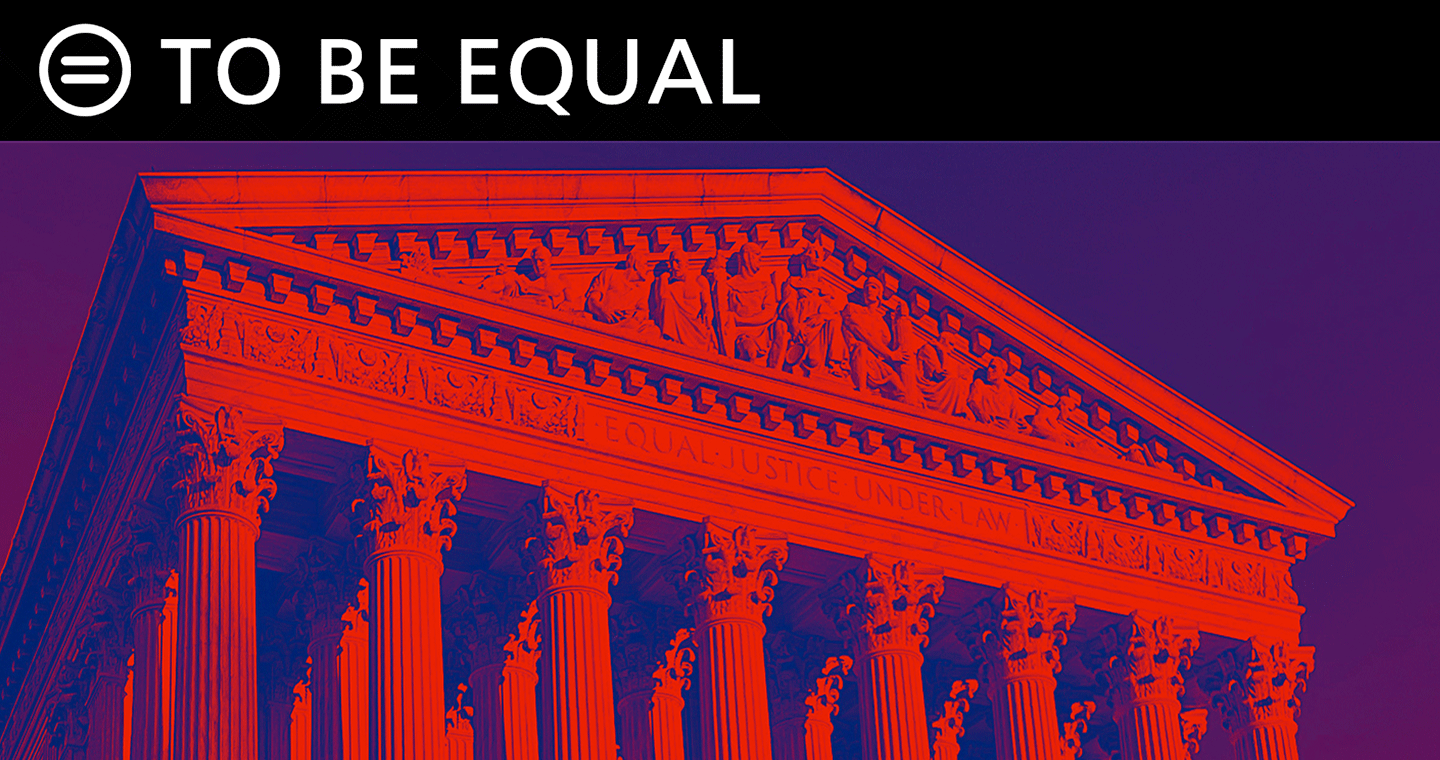
This week’s U.S. Supreme Court decision in Louisiana v. Callais should be called exactly what it is: a power grab that silences Black voters and weakens American democracy.
At its core, this case was never about constitutional principle or procedural neutrality. It was about power — who gets to shape the political landscape, whose voices are amplified, and whose votes are diluted. By striking down Louisiana’s congressional map, which lawfully ensured that Black voters — nearly one‑third of the state’s population — had a fair opportunity to elect candidates of their choice, the Court has not merely reinterpreted the law. It has redefined it in a way that shields discriminatory outcomes from accountability.
For generations, Section 2 of the Voting Rights Act has served as one of the most critical safeguards against racial discrimination in our electoral system. It exists because of an undeniable history of exclusion, and it has been repeatedly reauthorized by Congress with bipartisan support because discrimination in voting is not a relic of the past. It is a structural reality that communities across Louisiana — and across the country — continue to confront.
This week’s ruling clears a dangerous path, not just for Louisiana but for every state, to impose new and nearly insurmountable barriers to proving violations of the Voting Rights Act. In practical terms, the Court has signaled that states may systematically weaken Black voting strength so long as they are careful enough not to leave behind explicit evidence of intent. The result is a legal framework that rewards clever discrimination while punishing communities seeking fairness.
In Louisiana, the consequences of this decision are not theoretical. Black residents have long endured some of the sharpest inequities in the nation — from environmental injustice along Cancer Alley to one of the highest incarceration rates in the country. Political representation is often the only tool communities have to fight back against these harms. Stripping Black voters of fair representation threatens not only democratic participation but their health, safety, and lives.
The danger does not stop at Louisiana’s borders. This ruling invites a new wave of aggressive, discriminatory redistricting across the South and beyond, threatening to hollow out decades of progress secured through sacrifice, struggle, and the blood of civil rights advocates who believed that democracy must include everyone.
Justice Elena Kagan’s dissent makes this moment unmistakably clear. The Court, she warned, now permits states to systematically dilute minority citizens’ voting power without consequence. That is not judicial restraint. It is the abandonment of a constitutional obligation and the completion of a long-term effort to dismantle the Voting Rights Act piece by piece.
We reject the fiction that racial inequity in political representation is incidental rather than structural. We reject a vision of democracy in which Black political power can be minimized under the cover of plausible deniability. And we reject the notion that this decision signals the end of the fight. It does not. It is a call to action.
Louisiana’s leaders must act with integrity and accountability. They must draw a congressional map that reflects the state’s true demographics, not one engineered to dilute Black political power. They must ensure that Black voters have a fair and realistic opportunity to elect candidates of their choice, consistent with both the spirit and the original intent of the Voting Rights Act, and reject political gamesmanship masquerading as neutrality.
Congress must also act — and without delay. The Voting Rights Act was not a concession extracted from reluctant powerholders; it was a commitment to democracy itself. Congress has both the authority and the responsibility to restore and strengthen the protections gutted by this ruling.
And communities must stay engaged. Disengagement is exactly what this system depends on. Show up at public hearings. Contact legislators. Demand accountability. And show up at the ballot box in November 2026 to elect representatives committed to expanding, not dismantling, the right to vote.
Fair and equitable political representation has never been willingly granted. It has always been fought for. The National Urban League and the Urban League of Louisiana will continue that fight — through advocacy, litigation, organizing, and policy — to ensure that the voting power of Black Americans is not hollowed out. This is not the end. It is a beginning.
###
17TBE 5/2/26 ▪ 117 W. 125th Street ▪ New York, NY 10027 ▪ (212) 558-5300
Connect with the National Urban League
Instagram: https://www.instagram.com/naturbanleague
Facebook: https://www.facebook.com/NatUrbanLeague
Threads: https://www.threads.net/@naturbanleague
YouTube: http://bit.ly/YTSubNUL
Newsletter: http://bit.ly/SubscribeNUL
Website: https://www.nul.org