

The Postal Service Should Be Funded Rain, Snow, Sleet, or Stalemate
Marc H. Morial
President and CEO
National Urban League
There is an institution older than the United States itself that is now fighting for its survival, and too many people in power are watching it happen without lifting a finger.
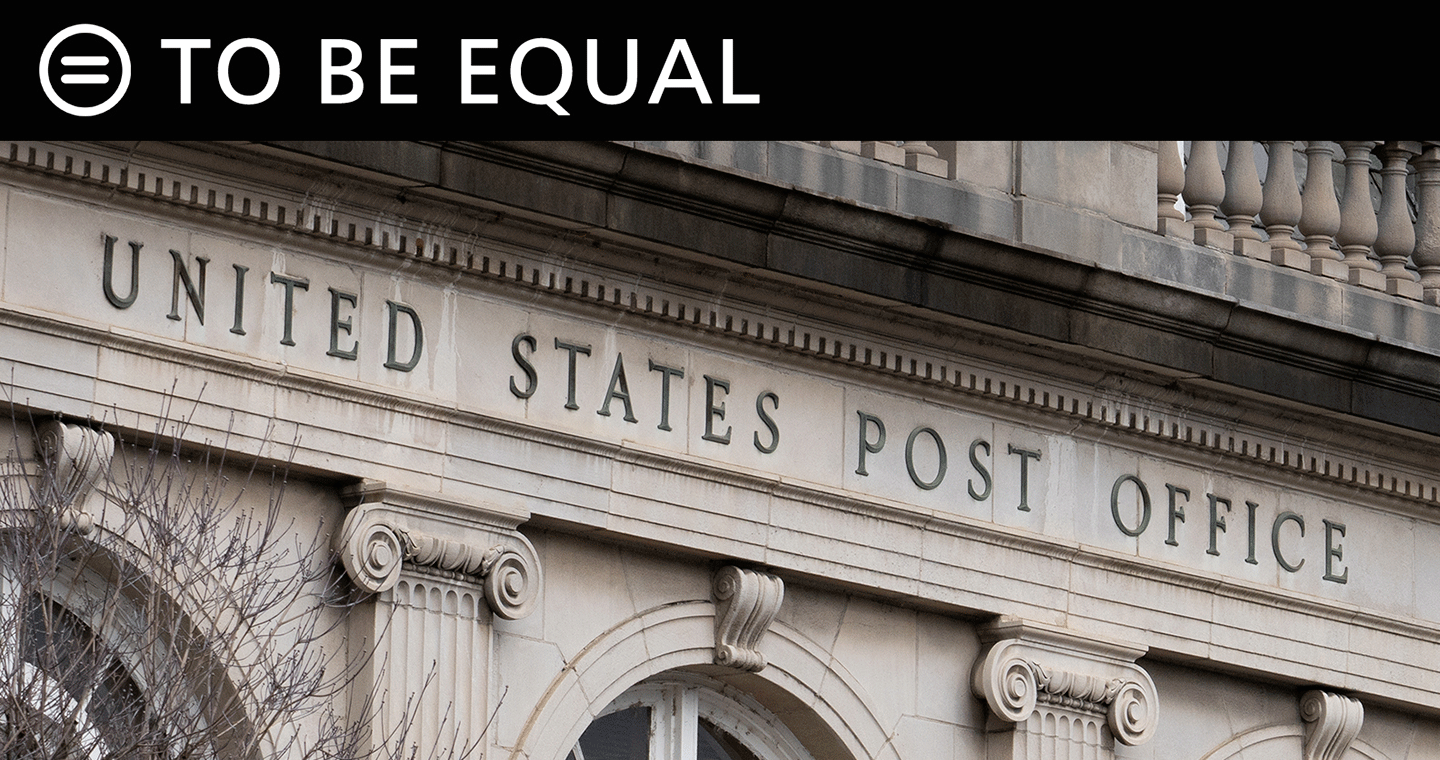
The United States Postal Service was founded in 1775, a year before the Declaration of Independence. Benjamin Franklin was the first Postmaster General. It has survived wars, depressions, technological upheavals, and the death of the handwritten letter. It has never missed a day of service. Today, it is being quietly bled out, and the silence from Congress is its own kind of crisis.
The Postmaster General has warned lawmakers that the agency is at a "critical juncture" and will run out of cash in less than a year unless Congress allows it to borrow more money. "At our current rate, we'll be out of cash in less than 12 months. So in about a year from now, the postal service would be unable to deliver the mail," Postmaster General David Steiner said before a House subcommittee. This is not a hypothetical. USPS suspended employer pension contributions in April 2026, pausing roughly $200 million every two weeks to free $2.5 billion in cash just to keep the lights on.
This is the slow unraveling of an institution that helped build the American middle class.
The Postal Service was never just a place to buy stamps. It was infrastructure. It was connectivity before broadband. It was the original equalizer, guaranteeing that a family in rural Mississippi and a family in Manhattan received the same service at the same price. It built a path into the middle class for generations of Black Americans who could not access employment in the private sector. Postal work was union work, stable work, dignified work, one of the first federal employers to hire Black men and women at a meaningful scale. In city after city, the post office was not just a government building; it was a community anchor.
USPS continues to operate its universal delivery network, visiting 168 million addresses, six days a week. It remains the largest mail service in the world, delivering nearly 40 percent of mail sent globally. And it does all of this while operating under congressional mandates that private competitors never face, including the requirement to serve every address in America at a uniform price, regardless of how remote or expensive that delivery is.
The financial crisis did not appear overnight. USPS has lost money almost every fiscal year since 2007, with net losses totaling approximately $109 billion from fiscal years 2007 through 2024. Much of that loss traces back to a 2006 law that forced the agency to pre-fund 75 years of retiree health benefits in just 10 years, a burden placed on no other federal agency or private company. Congress created the problem. Congress has been slow to solve it. And now, rather than stepping up with the legislative action that every credible financial analysis says is required, too many members are standing aside while the institution crumbles.
Privatizing the USPS could mean the end of guaranteed mail service to every American address, leaving many rural customers without the deliveries they depend on. For communities of color, the elderly, people with disabilities, and low-income families who depend on the Postal Service for medications, government benefits, and financial correspondence, this is not an inconvenience. It is a rupture in the basic terms of citizenship.
And this is where the stakes become undeniable, because we are not having this conversation about postal funding in a vacuum. We are having it in an election year, with a Supreme Court case sitting on the docket that could make the reliability of mail delivery a matter of life or death for American democracy.
The Supreme Court is expected to issue a ruling in Watson v. Republican National Committee months before the November midterm elections. The case centers on the Republican Party's challenge to Mississippi's law allowing mail ballots postmarked by Election Day to be counted if they arrive within 5 business days afterward. Twenty-nine states, plus Washington, D.C., count at least some timely cast ballots if received within a brief window after Election Day.
The National Urban League filed an amicus brief defending those grace periods. We did so because we understand what is at stake. Black, Hispanic, and Native American voters encounter the greatest barriers to in-person voting due to greater polling relocation and removal. Mail voting is not a convenience for these communities. It is often their most reliable path to the ballot. Now consider what happens if the Court guts those grace periods just as the Postal Service is too underfunded to guarantee timely mail delivery. Voters who rely on mail voting, such as military and overseas voters, voters with disabilities, and older voters, would face the most significant impacts if postmark deadlines are struck down.
The two crises connect. A weakened Postal Service cannot guarantee that a ballot mailed on Election Day will arrive within the shrinking window the courts may allow. The math is simple, and the intent is legible. When you hollow out the institution and restrict the deadline simultaneously, you do not need to prevent people from voting. You just make their votes disappear in the mail.
Congress must act. Not eventually. Now.
Increase USPS's borrowing authority. Stabilize its finances. Restore the workforce that has been cut. Protect the institution that has served this country since before it was a country.
The National Urban League has spent more than 115 years fighting for the full citizenship of Black America. We have fought at the ballot box, in the courts, and in the halls of Congress. We know that democracy is not threatened only by dramatic, obvious assaults. Sometimes it is threatened by budget shortfalls, by inaction, and by the slow erosion of the infrastructure that connects people to their government and their rights.
Either way, this November, the people will have something to say about who chose to stand by while the mail stopped running.
###
15TBE 4/18/26 ▪ 117 W. 125th Street ▪ New York, NY 10027 ▪ (212) 558-5300
Connect with the National Urban League
Instagram: https://www.instagram.com/naturbanleague
Facebook: https://www.facebook.com/NatUrbanLeague
Threads: https://www.threads.net/@naturbanleague
YouTube: http://bit.ly/YTSubNUL
Newsletter: http://bit.ly/SubscribeNUL
Website: https://www.nul.org