

Op-Ed: Closing the Digital Divide is Civil Rights Imperative
Written By:
Hashley Heriveaux Jr | Affiliate Services Summer Advisor
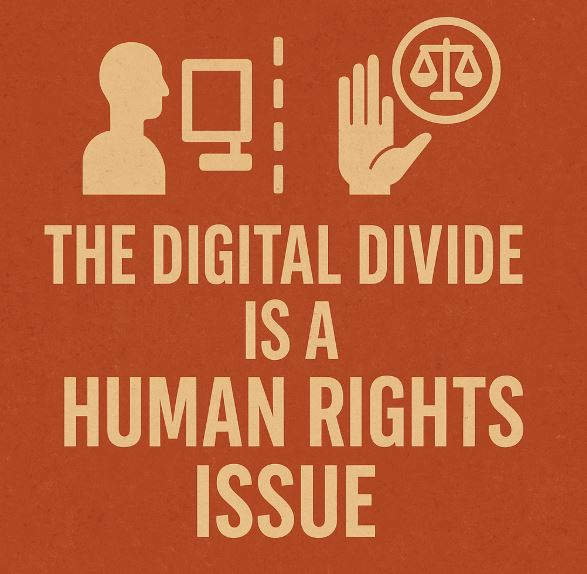
For generations, civil rights advocates have fought to ensure that opportunity is not determined by race, income, or zip code. Today, that fight has entered a new arena. Access to reliable internet service and digital skills has become just as essential as access to quality education, stable employment, and affordable healthcare. Yet millions of Americans remain disconnected from the tools that increasingly determine who succeeds and who falls behind. The digital divide is not simply a technology issue. It is a poverty issue, a diversity issue, and a democracy issue.
The National Urban League's D3 agenda challenges us to confront barriers that prevent communities from reaching their full potential. As Marc Morial explained when introducing Empowerment 2.0, the framework is built around three priorities: "Defend Democracy," "Demand Diversity," and "Defeat Poverty" (Morial, 2023). These priorities are deeply interconnected, especially when examining the growing importance of digital access in modern society.
The challenge of digital exclusion is particularly troubling because technology now influences nearly every aspect of daily life. Student’s complete assignments online, job seekers submit applications through digital platforms, and patients increasingly rely on telehealth services to access medical care. When individuals lack reliable internet access or the skills necessary to navigate these systems, they are placed at a significant disadvantage. The Urban League has emphasized that its mission includes creating pathways that enable underserved communities to achieve "economic self-reliance, parity and power, and civil rights" (Urban League of Greater Pittsburgh, n.d.). In today's economy, achieving those goals requires meaningful access to technology.
The connection between digital access and poverty is impossible to ignore. Individuals without broadband service often face obstacles in education, workforce development, and entrepreneurship. As the Urban League movement has argued, efforts to "close the gaps in education, healthcare, housing, and justice" are essential because these areas form the foundation for economic advancement (Urban League of Greater Pittsburgh, n.d.). Technology access has become a critical component of each of these areas. Without it, families may struggle to take advantage of opportunities that could improve their economic circumstances. Defeating poverty therefore requires more than traditional policy solutions. It requires investments that ensure all communities can participate fully in the digital economy.
Digital equity is also central to the goal of demanding diversity. The technology sector continues to shape the future of work, innovation, and communication, yet many underrepresented communities remain excluded from leadership positions and career opportunities within the industry. Morial has argued that society must insist on "Diversity, Equity, and Inclusion in all aspects of American life" and ensure equal opportunities for future generations (Morial, 2023). Expanding access to technology education and workforce training can help create more inclusive pathways into high growth industries. Representation matters because diverse experiences strengthen innovation and help organizations better understand the communities they serve.
The digital divide also poses serious challenges to democratic participation. Americans increasingly depend on digital platforms to obtain information, engage in public discourse, and participate in the civic process. When access is unequal, participation becomes unequal. According to the National Urban League, the D3 campaign seeks to address threats to democracy by combating barriers that limit civic engagement and public participation (National Urban League, 2024). Morial has stated that the movement must "demand the full restoration of the Voting Rights Act" and strengthen efforts that ensure every voice is heard (Morial, 2023). In a society where information is often accessed online, democratic participation depends partly on whether citizens can connect to the digital world.
Addressing the digital divide will require action from government leaders, private industry, educational institutions, and community organizations. Expanding broadband infrastructure must be paired with investments in affordability and digital literacy. Employers should strengthen efforts to recruit diverse talent into technology related fields, while policymakers should support programs that help underserved communities acquire the tools necessary to compete in an evolving economy. Community based organizations, including Urban League affiliates across the country, will continue to play a critical role in connecting people with resources and opportunities.
The struggle for civil rights has always adapted to the challenges of each generation. Today, one of those challenges is ensuring equal access to technology and digital opportunity. If we are serious about "Defend Democracy," "Demand Diversity," and "Defeat Poverty" (Morial, 2023), then digital equity must become a national priority. The future belongs to those who can connect, create, and compete. Our responsibility is to ensure that every American has that chance.
--
References
Morial, M. H. (2023, August 14). To Be Equal: Empowerment 2.0 focuses on three Ds. New Pittsburgh Courier. https://newpittsburghcourier.com/2023/08/14/to-be-equal-empowerment-2-0-focuses-on-three-ds/
National Urban League. (2024, January 8). National Urban League president Morial announces D3, a new phase of advocacy and activism to put MLK's dream into action. Indianapolis Urban League. https://www.indplsul.org/national-urban-league-president-morial-announces-d3-a-new-phase-of-advocacy-and-activism-to-put-mlks-dream-into-action/
Urban League of Greater Pittsburgh. (n.d.). Three Ds campaign. https://ulpgh.org/three-ds-campaign/