

National Urban League Opens New York's First Civil Rights Museum on Harlem’s Historic 125th Street
NATIONAL URBAN LEAGUE OPENS NEW YORK’S FIRST CIVIL RIGHTS MUSEUM ON HARLEM’S HISTORIC 125TH STREET
The Urban Civil Rights Museum in Harlem is the nation’s first museum dedicated to the Northern Civil Rights Movement
HARLEM, NY (November 14, 2026) — The National Urban League today opened the doors of the first civil rights museum in New York and the nation’s first museum dedicated to the Northern Civil Rights Movement — the Urban Civil Rights Museum in Harlem.
National Urban League President and CEO Marc H. Morial and Museum Executive Director and Chief Curator Jennifer Scott were joined by elected officials, community leaders, arts and culture leaders for a ribbon cutting ceremony. The Urban Civil Rights Museum in Harlem launched today with the museum’s Opening Weekend Celebration, a community focused event that invites residents, families, students and visitors to experience the museum and come together through culture, storytelling and dialogue. The museum is the final component of the Urban League Empowerment Center on 125th Street, which is also home to the National Urban League’s national headquarters.
“The Urban Civil Rights Museum is a promise kept to Harlem and to the nation,” Morial said. “It preserves a chapter of American history that too many people never learned, right here on 125th Street, where so much of that history was made. For too long, the story of civil rights in America has been told as a Southern story, but the fight for fair housing, good jobs, quality schools and equal justice was waged just as fiercely in the cities of the North, and Harlem was at the heart of it. We built this museum so that the next generation can see themselves in that legacy and carry it forward.”
“Many of the stories in this museum come from Harlem itself: from families, neighbors and community members who lived this history and trusted us to share it,” Scott said. “As the country changes, preserving those memories is urgent. Walking through these galleries, visitors will meet the people who organized, marched, boycotted, and built institutions across the urban North. We trace four centuries of that history, from the Great Migration and the Harlem Renaissance to the movements for justice happening today. Our hope is that every visitor leaves understanding that civil rights history isn’t only something to remember. It’s something to take part in.”
Following the ceremony, guests of all ages explored the history of the Northern Civil Rights Movement throughout the museum’s galleries. The celebration continues on Sunday, November 15, from 12 to 5 p.m. with music, dance and hands-on art experiences honoring the culture, creativity and resilience of Harlem and Black communities nationwide. The program reflects Harlem’s longstanding tradition as a place where art, activism, education. and community meet.
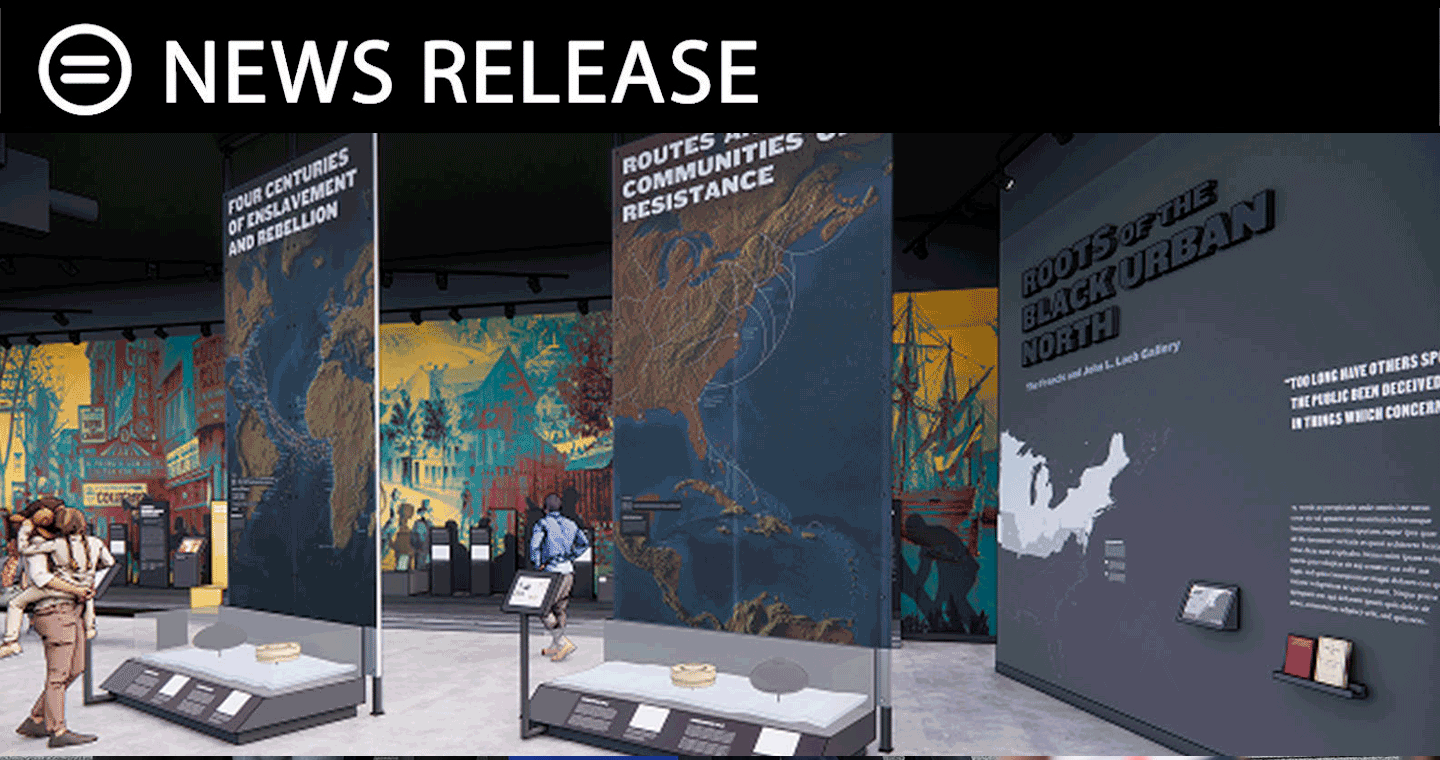
The Urban Civil Rights Museum in Harlem’s permanent exhibition features eight galleries tracing more than four centuries of history. It begins with the roots of Black life in Northern cities and the Great Migration, moves through the Harlem Renaissance and the modern civil rights struggle, and ends with contemporary movements for justice and civic participation. Together, the galleries illuminate the people, movements and ideas that transformed American democracy. The museum also opened its inaugural temporary exhibition, Thriving! Harlem as Homeplace, which will be the first to reside in the museum's rotating gallery space. The work is a love letter to Harlem.
“The Urban Civil Rights Museum in Harlem will preserve and share the history of Black America and the mighty struggle for equality under the law and the fuller realization of America’s founding principle that all people are created equal. The Urban Civil Rights Museum will also create good-paying jobs and boost the surrounding communities for generations to come,” U.S. Senator Charles Schumer said. “I am proud to have delivered $4 million in federal funding to help make this historic project possible and to support the ongoing legacy of the National Urban League, the broader civil rights movement, and the opening of the first museum dedicated to the Northern Civil Rights Movement. Congratulations to the National Urban league, its many members, and its dynamic leader Marc Morial for bringing this museum to life.”
“The opening of the Urban Civil Rights Museum in Harlem commemorates a rich history of advocacy for civil rights,”U.S. Senator Kirsten Gillibrand said. “This archive of the historic legacy of the Civil Rights Movement will educate future generations on what it has meant to fight for equality. I was proud to secure $4 million in federal funding to help bring this project to fruition, and I can't wait to see the good this museum will bring to our city and nation.”
The museum preserves and elevates stories that have often been left out of traditional narratives of the Civil Rights Movement. Through exhibitions, collections and community engagement, it documents Harlem’s legacy and safeguards the memories of residents whose experiences are at risk of being lost amid rapid neighborhood change. As part of the Urban League Empowerment Center, the museum also serves as a cultural anchor and destination for Harlem. It helps close longstanding gaps in access to cultural and educational resources and invites visitors to see themselves as participants in the ongoing pursuit of justice, opportunity, and equality.
The Urban Civil Rights Museum in Harlem is open for visitors Wednesday to Saturday, 10am to 5pm, and Sunday, 12 p.m. to 5 p.m., at the Urban League Empowerment Center, 117 West 125th Street in Harlem. Admission is by timed-entry ticket, and visitors are encouraged to purchase tickets in advance at urbancivilrightsmuseum.org.
The museum also features a café and gift shop, operated in partnership with Hudson News.
"New York has always been at the forefront of movements that advance freedom, fairness, and opportunity," New York Governor Kathy Hochul said. "The opening of the Urban Civil Rights Museum in Harlem honors the leaders, communities, and everyday citizens whose determination helped shape our state and our nation. This extraordinary institution will educate, inspire, and remind us that the work of building a more just society remains as important today as ever."
The Urban Civil Rights Museum in Harlem is made possible with the generous support of Governor Hochul, whose administration provided more than $110 million to support the Urban League Empowerment Center and the museum; Senators Schumer and Gillibrand, who directed $4 million in Community Development Funds to the museum; Empire State Development, which supported the museum’s identity, branding and website through a Market New York grant; the Mellon Foundation, which is funding the museum’s inaugural exhibitions and related public programs; the Terra Foundation for American Art, which is supporting research, archival work, an exhibition catalog and a 2027–2028 special exhibition; Macy’s, presenting sponsor of opening weekend and inaugural programs; and Aramark, which supports Storytime on the Stoop, the museum’s education program for young visitors.
The museum’s design and visitor experience were brought to life by Local Projects, which led exhibition and media design; Kubik Maltbie, Inc., which handled exhibition fabrication and AV integration; Pacific, which created the museum’s logo, visual identity and website; and Polymode, which designed the inaugural exhibition.
About The Urban Civil Rights Museum in Harlem
The Urban Civil Rights Museum in Harlem (UCRM) is New York State’s first civil rights museum and the nation’s first dedicated to the Northern Civil Rights Movement. Rooted in Harlem, UCRM is located within the National Urban League Headquarters at the Urban League Empowerment Center on 125th Street. Through exhibitions, public programs, and educational experiences, the Museum explores the history of the civil rights movement, connecting history to the present. It inspires visitors of all backgrounds to engage in meaningful dialogue, deepen their understanding of the past, and become agents of change in the ongoing pursuit of justice. For more information visit www.urbancivilrightsmuseum.org.
FOR IMMEDIATE RELEASE
CONTACT: Teresa Candori
tcandori@nul.org | 212-558-5362
Photos available at this link
# # #