

Miami Urban League CEO Makeda Johnson Aims to Revitalize the Organization's Presence in Community
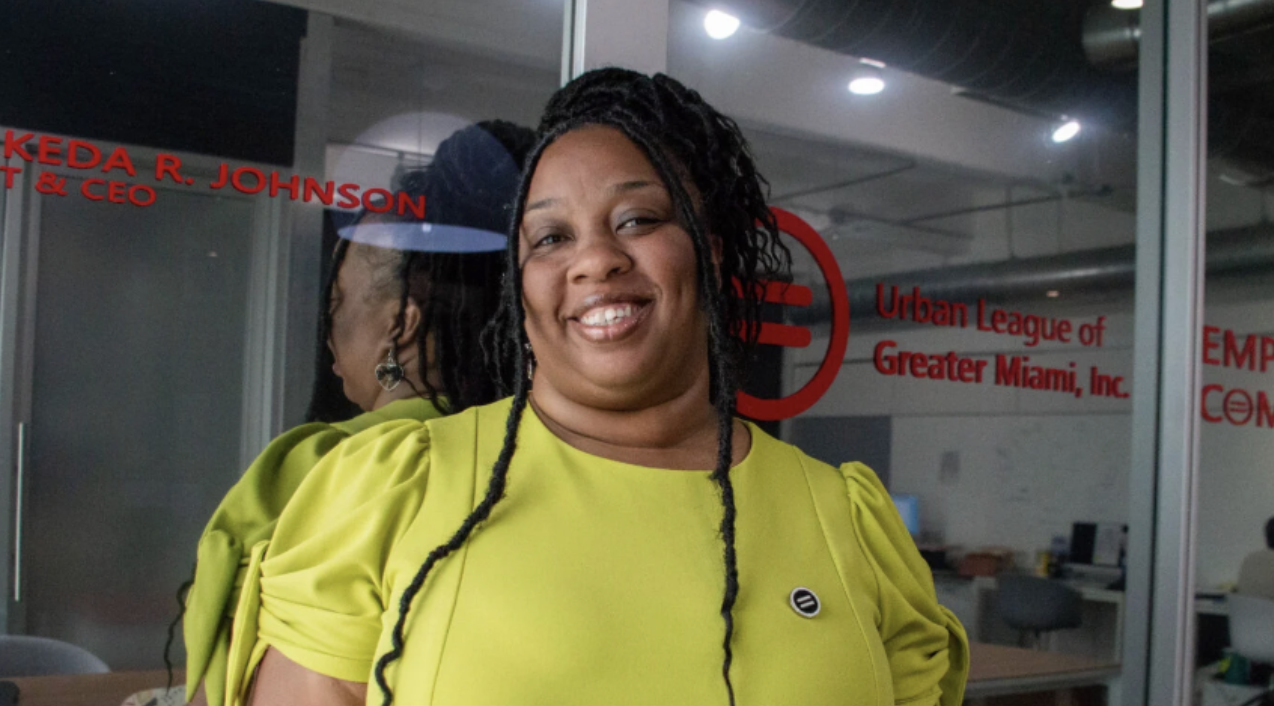
Nearly seven months into her tenure as President and CEO of the Urban League of Greater Miami (Miami, FL), Dr. Makeda Johnson’s mission is clear: restore the organization’s visibility while expanding its impact on education, housing, and economic empowerment.
Johnson, who took the helm on Aug. 25, 2025, is the first woman to lead the affiliate in its 80-year history. Her appointment marked a new chapter for one of Miami’s longest-standing civil rights and community development organizations following the six-decade tenure of T. Willard Fair.
While Fair guided the organization through segregation, integration, and decades of advocacy, the Urban League has recently maintained a quieter approach to public engagement. Last year, Fair told The Miami Times that the group preferred to focus on its work rather than promote it, rarely issuing press releases or digital updates.
Johnson, however, is ushering in a season of vocal advocacy.
“I believe my predecessor did an amazing job,” Johnson told The Miami Times. “He definitely laid the foundation, even in our new strategic plan, ‘Legacy, Leadership, Lift.’ We have to build on the legacy he built, but we are now moving toward the leadership of not just myself and our executive team, but also the individuals that work with us.”
One of her immediate priorities is re-establishing the organization’s presence in the public eye.
“I want people to understand that the Urban League is still here, that we're still doing the work within the community,” she said. “We have a ton of programming coming up just to reintroduce ourselves. We respect the past, but we're also trying to grow into the future.”
Johnson is no stranger to the Urban League’s national mission.
Her career path has been a steady climb through the movement, having served as director of education for the Buffalo, New York, affiliate, followed by roles as director of education and emerging programs at the Urban League of Central Carolinas, and eventually chief operating officer of the Urban League of Winston-Salem.
For Johnson, the role is also deeply personal.
“My grandmother was a maid, so when you look at that, and you put that in perspective — she was a woman who did not have a formal education, and her granddaughter is sitting in a position to make change — it gives me almost a sense of pride to say that I stand on the shoulders of my ancestors.”
To read the full story, click here.