

Immigration Raids In New Orleans: A Bait-And-Switch On Public Safety
Marc H. Morial
President and CEO
National Urban League
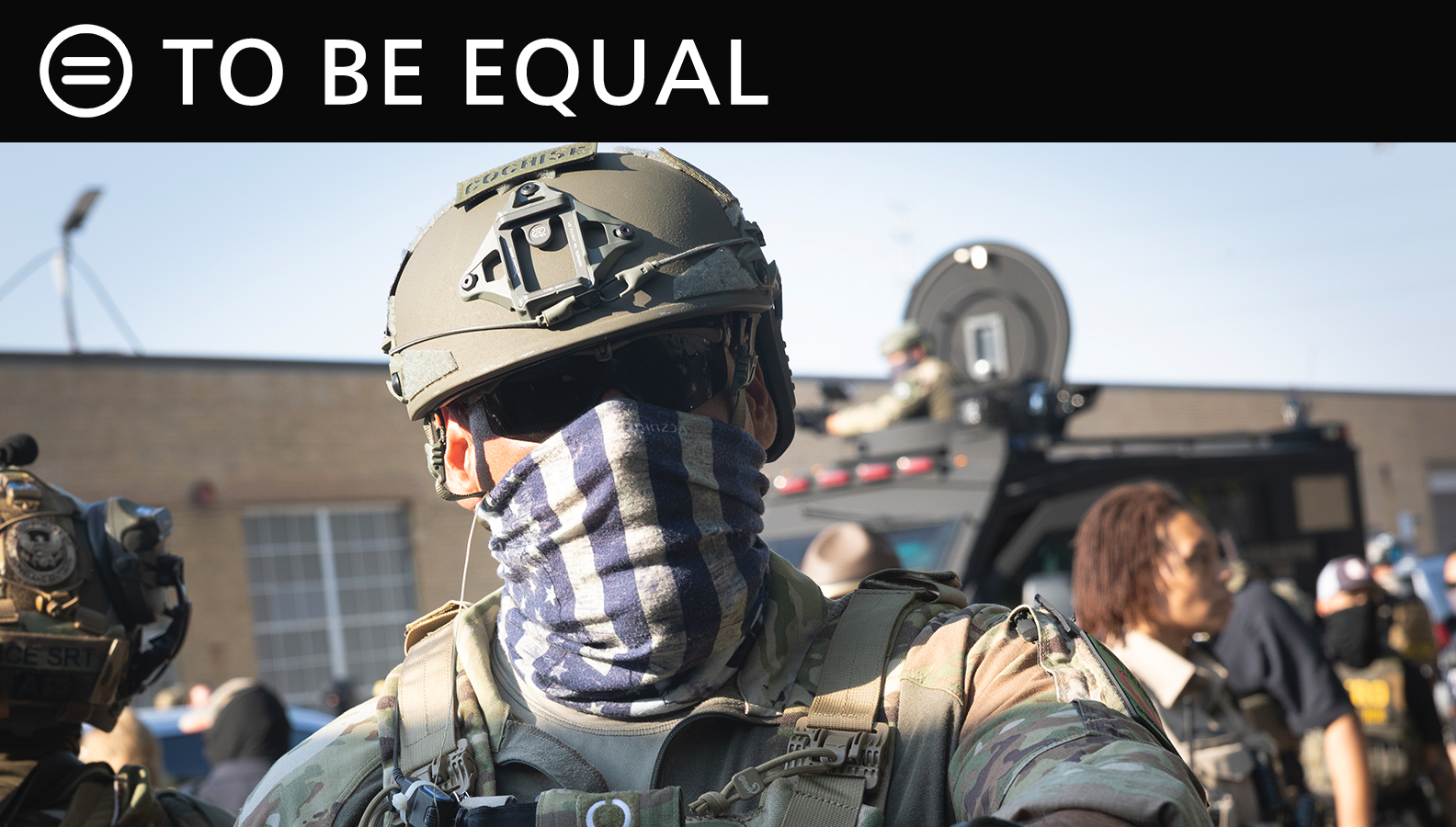
“What we are seeing unfold in our community is not public safety; it is a political stunt wrapped in badges, armored vehicles, and military uniforms.” – U.S. Rep. Troy Carter
The Trump administration vowed its south Louisiana immigration sweep would target violent criminals.
In reality, a mere handful of those swept up in “Operation Catahoula Crunch,” have criminal histories of any kind. Far more of those detained have been accused of no wrongdoing and hold authorization them to live and work in the United States.
Meanwhile, school absences have spiked, sick and injured people – even pregnant women in labor – are avoiding medical care, and hotel and restaurant staff aren’t showing up to work, threatening New Orleans’ vital tourism industry.
Like immigration sweeps in other cities, Operation Catahoula Crunch is an abject failure and a bait-and-switch: the promise to take dangerous criminals off the street was replaced with a a ruthless racial profiling initiative that accomplishes nothing but terrifying political theater.
Public safety is the freedom to walk to work without fear, to send your children to school with confidence, to seek medical care when it is needed, and to trust that the laws will be applied fairly. It is not a press conference. It is not a show of force for its own sake. And it is certainly not the indiscriminate use of raids that destabilize families, disrupt workplaces, and sow distrust between communities and the institutions sworn to serve them.
When the vast majority of those detained in these raids have no criminal record, the narrative that these efforts are “taking the worst of the worst off the streets” crumbles under its own weight. We are left with a strategy that confuses immigration status—a civil matter—with criminality. That confusion is not just a harmless mistake. It drains resources from the genuine work of crime prevention and investigation. It chills cooperation with law enforcement, especially among witnesses and victims who are essential partners in solving serious crimes. It sends the message that compliance and authorization don’t matter—that even if you follow the rules, if you’re part of a targeted community, you are vulnerable.
New Orleans understands resilience. We know what it means to rebuild from devastation, to hold together through storms, both literal and political. Our city’s strength has always come from neighbors who show up for one another: cooks and carpenters, artists and nurses, faith leaders and small business owners—many of whom are immigrants whose labor, culture, and civic engagement knit the fabric of our local economy. The raids don’t merely fray that fabric; they rip at its seams. Employers lose trusted workers. Children come home to empty chairs at the dinner table. Congregations rally, again, to hold families together in the face of uncertainty the government itself has manufactured.
Furthermore, when individuals who have authorization to remain are detained, the legitimacy of these raids is not just questionable; it is compromised. Due process is not an inconvenience; it is the bedrock of American law. Immigration enforcement must be lawful, targeted, and accountable. If the mechanism repeatedly ensnares authorized residents and long-time community members without criminal records, then the mechanism is broken—or it is being used for purposes beyond public safety.
Law enforcement should be focused on evidence-based priorities: violent crime, trafficking, exploitation. City and federal agencies should invest in community policing models that build trust, not fear. Employers should be partners in compliance, clear on their responsibilities and confident that adherence to the law protects their workforce. Courts and administrative bodies must have the resources to process immigration cases efficiently and fairly, so people are not trapped for years in limbo. And elected leaders—at every level—must speak with moral clarity: We will pursue safety without sacrificing justice, and we will measure success not by theatrics but by outcomes that make neighborhoods tangibly safer.
New Orleans has never been defined by exclusion. Our music, our food, our faith traditions, our entrepreneurial spirit—these are the gifts of many peoples, many journeys, woven into something singular and beautiful. Raids that cast wide nets in the name of public safety but capture mostly non-criminal, authorized residents are not a solution; they are a distraction. They do not protect us; they divide us. And they risk something precious: the trust without which no city can truly thrive.
Public safety and human dignity are not opposing goals. They rise and fall together. We can choose both.
###
50TBE 12/20/25 ▪ 117 W. 125th Street ▪ New York, NY 10027 ▪ (212) 558-5300
Connect with the National Urban League
Instagram: https://www.instagram.com/naturbanleague
Facebook: https://www.facebook.com/NatUrbanLeague
Threads: https://www.threads.net/@naturbanleague
YouTube: http://bit.ly/YTSubNUL
Newsletter: http://bit.ly/SubscribeNUL
Website: https://www.nul.org