

#EMMYSSOWHITE: Recognition, Representation, And The Unfinished Work Of Inclusion
Marc H. Morial
President and CEO
National Urban League
"Last night, the Television Academy confirmed what its own nominations told us two months ago: this is not a talent problem, it is a systems problem. When every winner across all twelve lead and supporting acting categories is white, in the same year that followed the industry's loudest promises about equity, the pattern is the story, not any single ceremony." – April Reign
More than a decade ago, a simple hashtag sparked a national reckoning in Hollywood.
When activist April Reign launched #OscarsSoWhite after the Academy Awards once again failed to recognize diverse talent, she gave voice to a frustration that millions of Americans had long felt. The problem was never simply who received nominations. It was about who gets to tell stories, whose humanity is deemed worthy of recognition, and who holds power in an industry that shapes how America sees itself.
At the time, the National Urban League joined the call for change. We challenged the Academy of Motion Picture Arts and Sciences to confront the reality that its overwhelmingly older, white, male membership did not reflect the diversity of the industry or the nation itself. We joined other civil rights organizations in demanding that major studios address persistent barriers to opportunity throughout the entertainment industry.
Some dismissed those concerns as "political correctness." Others insisted progress would happen naturally.
History proved otherwise. Only after sustained public pressure and specific institutional reforms did meaningful change begin to emerge. The Academy diversified its membership. Films such as Black Panther, Moonlight, Everything Everywhere All at Once proved to the nation what many of us had always known: audiences embrace authentic stories from diverse voices, and diversity is not a “woke” gesture. It is good art, good business, and good for society.
The lesson of #OscarsSoWhite was simple. Change happens when institutions are held accountable.
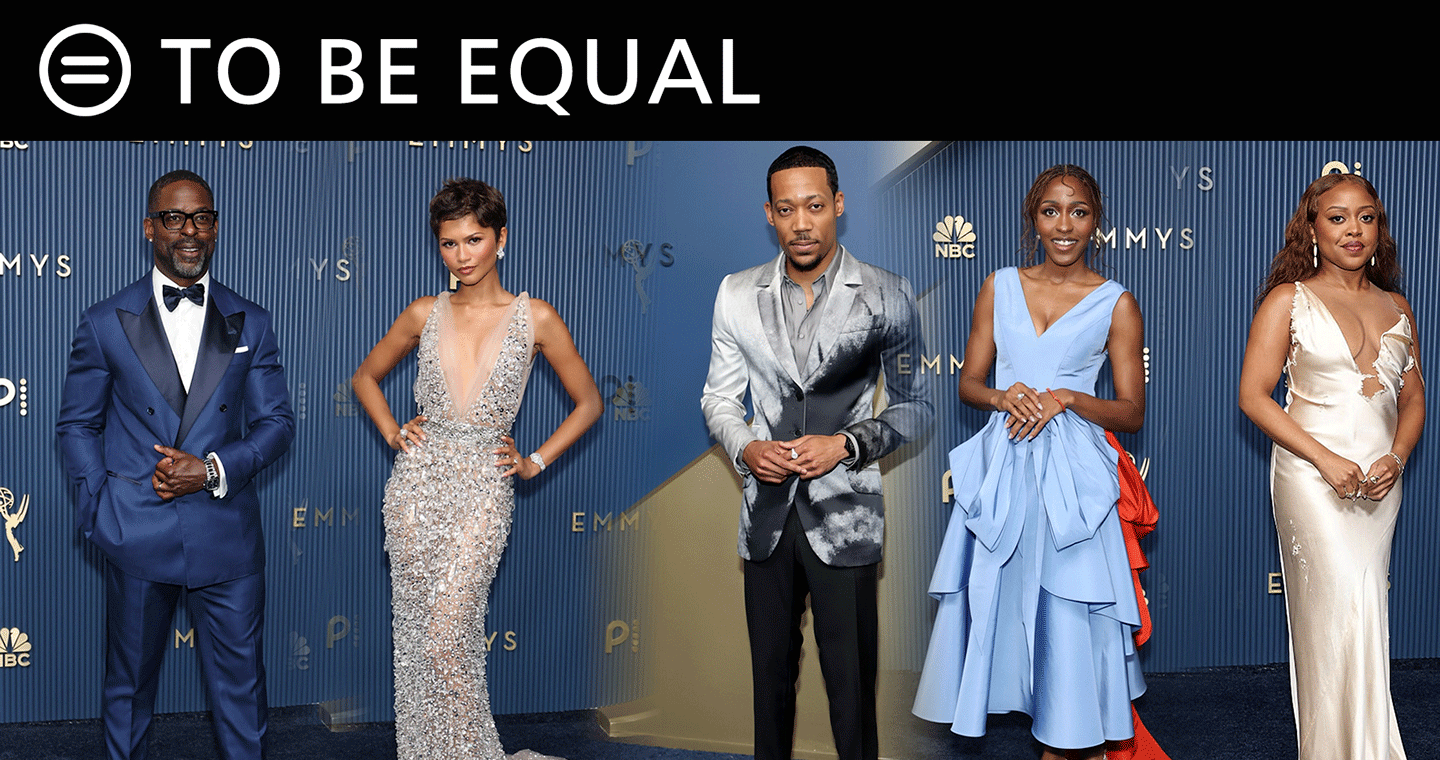
The Academy of Television Arts and Sciences seems to have forgotten that lesson. When the Emmy Awards were announced this week, no actors of color were honored with the prize.
Television has undergone a significant transformation in recent years. Streaming platforms have expanded the range of stories reaching audiences. Black creators, Latino creators, Asian American creators, Indigenous storytellers, and other historically marginalized voices have produced groundbreaking work that is reshaping the cultural landscape.
Yet Emmy recognition has not consistently reflected that diversity. Too often, outstanding performances and innovative programs from creators of color appear overlooked while familiar names, networks, and production circles dominate the awards conversation.
This matters because industry awards are not merely shiny trophies to adorn mantlepieces. They influence careers as a major factor in determining which projects are funded, what stories executives greenlight, which actors are cast in leading roles, and which creators have the opportunity to bring new ideas to life.
When recognition is distributed inequitably, opportunity follows the same pattern, and it extends beyond Hollywood.
Historically, Black Americans have fought not only for equal access to jobs and institutions but also for the right to be seen fully and fairly in our nation's cultural life. Representation influences public perception and shapes our assumptions about leadership, intelligence, heroism, beauty, and belonging.
The issue is not about setting quotas for awards. It’s about the systems used to evaluate excellence and whether they are broad enough, inclusive enough, and fair enough to recognize excellence wherever it exists.
The reforms that followed #OscarsSoWhite did not diminish artistic standards. On the contrary, they strengthened and elevated them. By expanding participation and broadening perspectives, the Academy became better positioned to recognize the full range of artistic achievement.
The television industry must embrace the same principle.
Networks, streaming platforms, production companies, talent agencies, and awards organizations should continue carefully examining who gets hired, who gets promoted, who sits on decision-making bodies, whose projects receive marketing support, and whose voices are included in conversations about excellence.
Most importantly, this conversation must not be dismissed as divisive. Diversity is not a threat to artistic achievement. Diversity enriches artistic achievement.
America's greatest strength has always been its rich abundance of varied voices and experiences. Our entertainment industry is at its best when it reflects that reality.
Our goal must be a cultural ecosystem where every talented creator has a genuine opportunity to succeed, where every audience can see itself reflected on screen, and where recognition follows merit rather than familiarity or historical precedent.
A decade ago, advocates behind #OscarsSoWhite were told they were asking for too much. Instead, they helped push an industry toward meaningful change.
Today, #EmmysSoWhite presents a similar challenge.
The question is whether the television industry will learn from the lessons of the past or wait until another generation of talented creators is forced to demand what should already be obvious: excellence exists in every community, and our highest honors should reflect that reality.
###
36TBE 9/18/26 ▪ 117 W. 125th Street ▪ New York, NY 10027 ▪ (212) 558-5300
Connect with the National Urban League
Instagram: https://www.instagram.com/naturbanleague
Facebook: https://www.facebook.com/NatUrbanLeague
Threads: https://www.threads.net/@naturbanleague
YouTube: http://bit.ly/YTSubNUL
Newsletter: http://bit.ly/SubscribeNUL
Website: https://www.nul.org