

Blacklash: Why Black Voters Showed Up
Marc H. Morial
President and CEO
National Urban League
"What we saw in this country is that our political power has been hit, our economic power has been hit... we've seen white nationalism, all those things. So, they hit us, we're hitting them back." –LaTosha Brown
When Black Americans perceive their rights, opportunities, or place in our democracy under threat, they do not retreat from civic life. They engage more deeply.
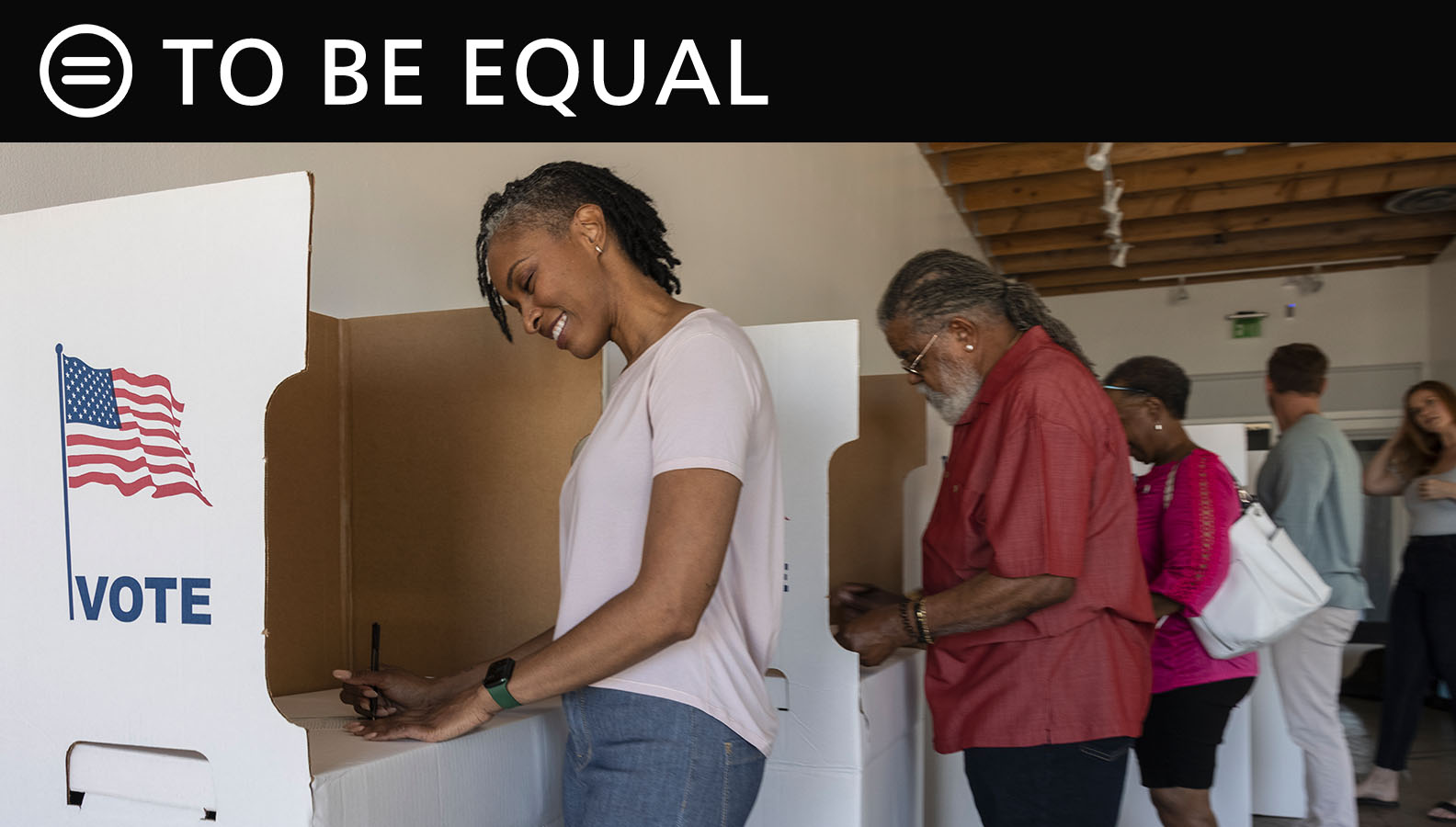
The overwhelming Black voter turnout in the midterm elections has inspired the term “Blacklash.”
Blacklash is what happens when efforts to suppress, marginalize, or diminish Black political power produce the opposite result. Rather than retreating, Black voters organize. Rather than disengaging, they mobilize. Rather than surrendering hard-won rights, they show up at the ballot box determined to defend them.
Though the term may be new for some, it’s hardly a new phenomenon. Blacklash is woven throughout American history.
When Reconstruction was overthrown and Black political rights were violently stripped away, Black Americans built institutions that sustained the long freedom struggle. When Jim Crow sought to silence Black voices, millions joined the fight that culminated in the Civil Rights Act of 1964 and the Voting Rights Act of 1965. When voter suppression tactics proliferated in the decades that followed, Black voter registration and civic engagement campaigns expanded.
Every attempt to push Black Americans to the margins has ultimately generated a renewed determination to claim our place in the nation's democracy. The midterm elections were no exception.
Black voters watched state legislatures enact restrictive voting laws after the 2020 election. According to the Brennan Center for Justice, dozens of states considered hundreds of measures restricting ballot access, and many enacted new limitations on voting. They witnessed attacks on diversity, equity, and inclusion initiatives, book bans targeting Black history, and efforts to weaken civil rights enforcement.
They also watched the Supreme Court overturn Roe v. Wade in Dobbs v. Jackson Women's Health Organization, a decision that not only eliminated a constitutional right that had existed for nearly half a century but raised broader questions about the future of other established rights and legal protections.
These developments were not viewed in isolation. They were understood as part of a larger struggle over who belongs, who participates, and whose voices matter in American democracy.
And Black voters responded.
The response was measurable. Across the South, majority-Black counties recorded higher turnout than majority-white counties, roughly 85 percent compared with 76 percent, according to an NPR analysis. The Brennan Center for Justice found especially strong participation in majority-minority counties previously covered by the Voting Rights Act's preclearance provisions. In some places, turnout was as much as ten percentage points higher than in 2022, a remarkable increase that many observers linked to concerns over the continued erosion of voting rights protections.
The increased participation followed years of legal and political battles over representation, including the Supreme Court's decision in Louisiana v. Callais, which further heightened concerns about the future of minority voting power. For many voters, these debates were not theoretical. They were about whether Black communities would continue to have a meaningful voice in choosing their representatives.
Families struggling with housing affordability knew elected officials would determine whether investments were made in affordable housing and homeownership opportunities. Workers facing stagnant wages and rising costs understood that elections influence economic policy, labor protections, and workforce investments. Parents worried about public schools knew that school boards, state legislatures, governors, and members of Congress make decisions that affect educational opportunity for generations.
Black voters understood that ballots shape these outcomes.
The data bear this out. Polling consistently found that Black voters ranked the economy, inflation, health care, threats to democracy, abortion rights, gun violence, and voting rights among their top concerns. Far from being single-issue voters, Black Americans approached the midterms with a sophisticated understanding that economic justice, civil rights, educational opportunity, and democratic participation are deeply connected.
Importantly, this turnout did not happen by accident. The history of Black political participation has always been rooted in community institutions. Black churches, historically Black colleges and universities, fraternities and sororities, labor unions, civil rights organizations, and grassroots activists have long served as engines of voter education and mobilization.
The National Urban League's Reclaim Your Vote initiative was built on that tradition. Through year-round voter registration, education, outreach, and election protection efforts, Reclaim Your Vote has engaged millions of voters across the country, reinforcing a simple but powerful message: voting is not merely a right, it is a responsibility. In communities where some sought to sow cynicism or confusion, Reclaim Your Vote and allied organizations worked to ensure that eligible voters had the information, resources, and confidence to make their voices heard.
Much of the commentary after the election focused on turnout as though it reflected a sudden burst of enthusiasm. In reality, it reflected something deeper: a conscious response to perceived threats and a collective commitment to democratic participation.
History shows that when barriers rise, Black participation often rises with them.
After the Selma-to-Montgomery marches helped secure passage of the Voting Rights Act, Black voter registration surged throughout the South. When opponents sought to curtail voting access after the Supreme Court's decision in Shelby County v. Holder, new generations of organizers launched expansive voter-engagement campaigns. After the murder of George Floyd sparked a national reckoning over race and justice, millions of Americans, including unprecedented numbers of young Black voters, became more civically engaged.
Again and again, efforts to restrict progress have generated movements that accelerate it.
There is a lesson here for anyone who continues to underestimate Black voters.
Every election cycle, predictions emerge suggesting Black voters will become discouraged, apathetic, or disengaged. Yet history repeatedly tells a different story. The descendants of those who fought for citizenship, voting rights, equal protection under law, and equal opportunity remain among democracy's most consistent defenders.
That is not because Black Americans believe the system is perfect. It is because we understand that meaningful change has never been achieved by sitting on the sidelines.
The high turnout we witnessed was not simply a political trend. It was a democratic response to a moment of challenge. It was an affirmation of citizenship. It was the latest chapter in a long tradition of civic participation born from struggle and sustained by hope.
###
45TBE 11/21/26 ▪ 117 W. 125th Street ▪ New York, NY 10027 ▪ (212) 558-5300
Instagram: https://www.instagram.com/naturbanleague
Facebook: https://www.facebook.com/NatUrbanLeague
Threads: https://www.threads.net/@naturbanleague
YouTube: http://bit.ly/YTSubNUL
Newsletter: http://bit.ly/SubscribeNUL
Website: https://www.nul.org