

Voting in Jails
An Equitable Justice Initiative
Help People Impacted by the System Exercise Their Right to Vote
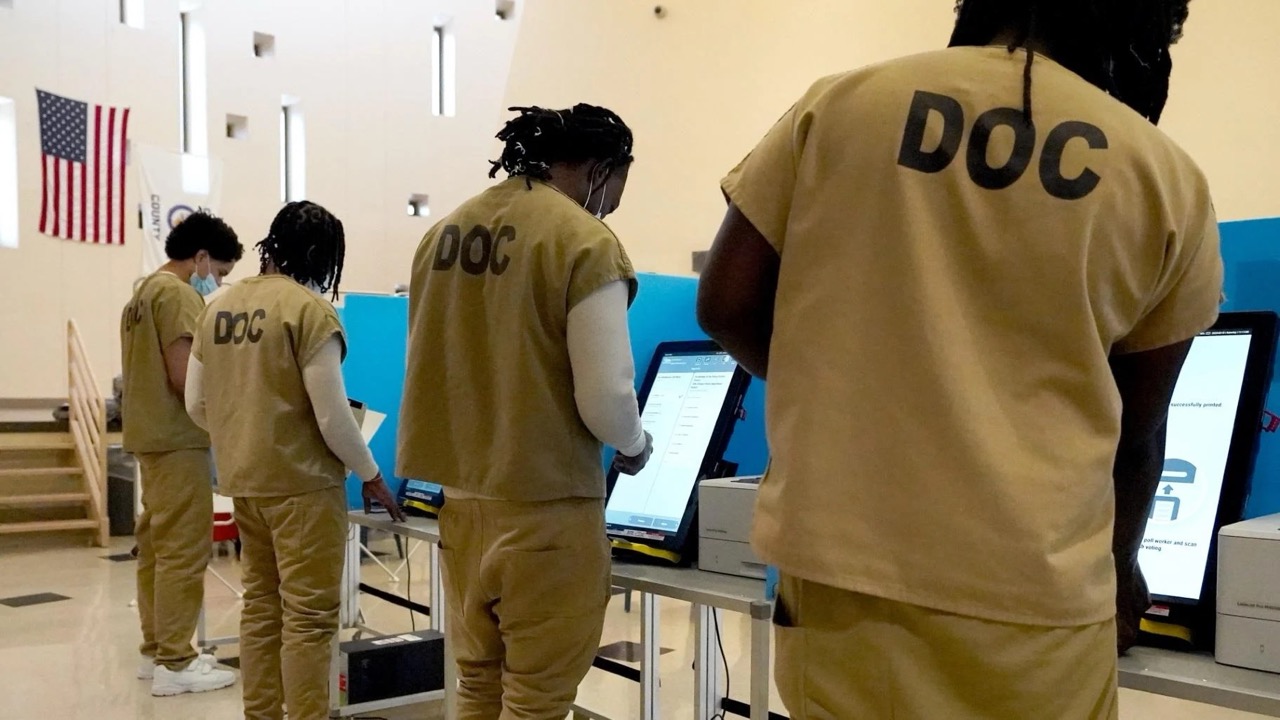
Our Voting in Jails initiative has one goal: to ensure everyone, regardless of their situation, can exercise their right to vote.
Being incarcerated doesn't mean someone is guilty of a crime, and many people are awaiting a fair trial. And most have not been convicted of a disenfranchising offense, are serving a misdemeanor sentence, or live in a state that preserves voting rights during incarceration.
Here are steps that your affiliate or organization can take to make sure all of our voices are heard.
Step 1: Partner With People Already Doing the Work
Identify organizations already doing registration and Get Out the Vote work in local jails to avoid duplication and cut costs, or start your own project if none exist.
These efforts are more successful when paired with an existing reentry program, whose relationships with jails, officials, and detained people can serve as a foundation.
Potential partners are:
- Civic engagement organizations (fraternities, sororities, houses of worship, universities)
- County Clerks
- Election Boards
- Legal aid organizations and public defenders
- The Sheriff’s Office and local jail administration.
Step 2: Get the Facts on Your State's Election Laws and Jails Data
States differ on voting in jails, and some even have polling sites inside jails. Learn about your state’s election law, including rules on assisting others to register.
- vote.org/absentee-voting-rules – absentee ballot rules by state
- tracker.votingrightslab.org/states – real-time tracking of bills affecting your state
Working with a local voting rights attorney is another great place to start.
Things to look for are:
- How many people are detained daily?
- How many ballots were requested for detained individuals in past elections?
- How many were returned?
Possible sources for this include the Sheriff’s Office, County Election Office, County Clerk, and Secretary of State.
Step 3: Build a Program
The midterm election is just a few weeks away. Now is the time to focus on creating materials and a way to share clear information with people who may not have access to the news while incarcerated.
To do that, you'll need:
- Materials: Focus on issues important to the community you serve. Explain who the candidates are, what the ballot initiatives are, and why they matter to them.
- Recruit and train volunteers: Staff entering facilities should understand the law, answer basic questions, stay completely nonpartisan, and know all materials, deadlines, forms, and jail rules. Consider inviting a nonpartisan election attorney to advise, and document that training occurred.
Step 4: Work with the Sheriff’s Office
To get this done, you'll need to work with local law enforcement, including your local sheriff.
As you set up these meetings, it's important to have a clear understanding of:
- Who You Are as an Organization
- Understand the Law
- Share Your Goal and How You Will Get It Done
- Ask How You Can Work Together
Here are a few steps on how:
- Lead with credibility. “We’ve been working with people before, during, and after incarceration through our reentry program for X years. We’re here as a partner who wants to make your facility’s job easier.” Officials need to know you are not new to this space.
- State the law. “Many people in your custody, including people detained pretrial and those serving misdemeanors [insert your state’s law], are legally eligible to vote in [state]. Misinformation, not the law, is what keeps them from voting.” Share any local registration and voting data.
- Show the gap is fixable. “Denver’s 2016 pilot with the sheriff, the elections department, and a community organization raised registrations from about 10 to over 300, and more than 25% of those registered cast ballots. Education and access made this possible.”
- Reduce the burden. “We will provide trained, nonpartisan volunteers and materials, and we will follow your security rules. We need a point of contact, agreed access, and a reliable mail process so ballots arrive on time.”
- Shift the narrative. “Jail voting supports reentry and safety.” Share positive stories and data on how voting promotes citizenship and reduces recidivism.
- Make the ask. “Will you authorize a limited pilot before the next election, with a debrief afterward to review the results together?”