

The March On Washington Isn't About The Past; It's About Our Future
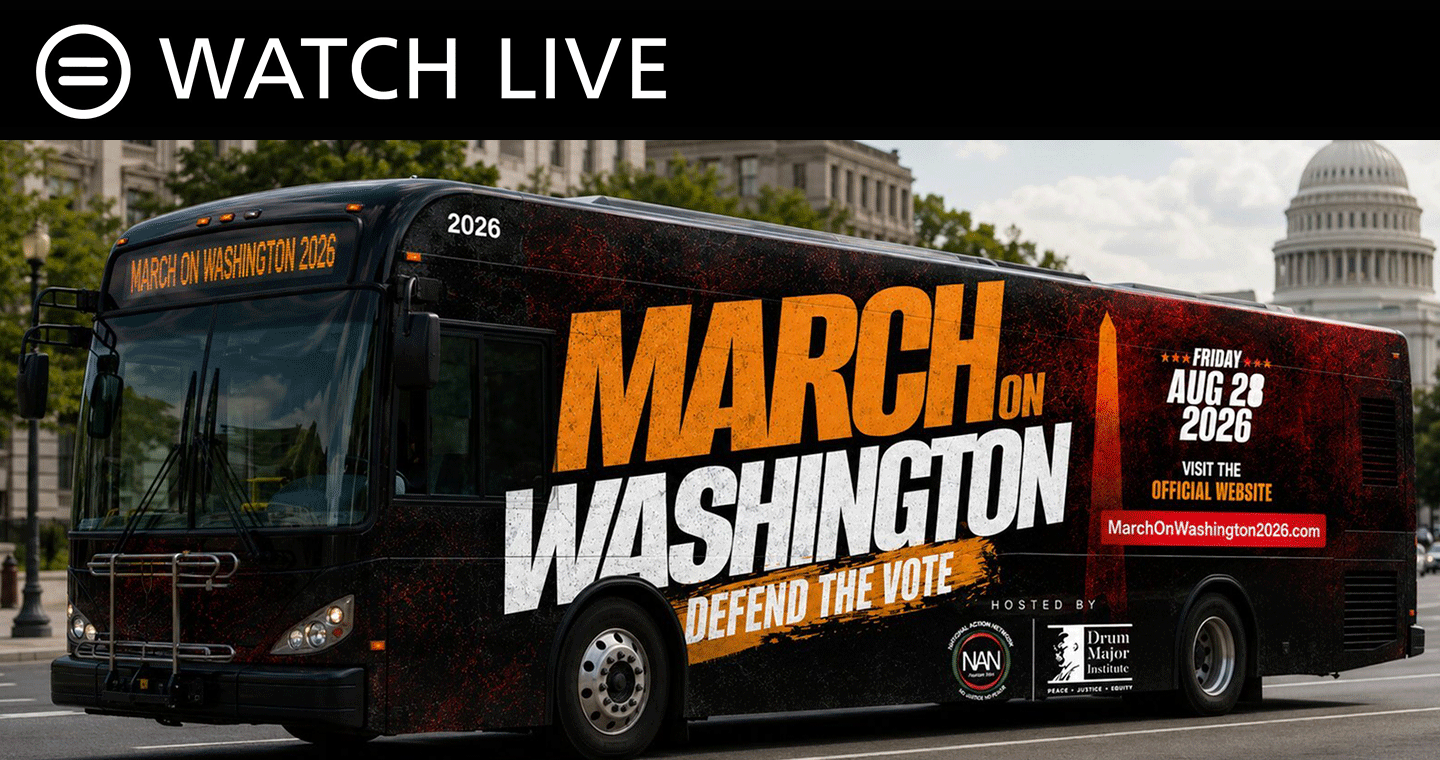
Watch the Friday, August 28th March Here
Marc H. Morial
President and CEO
National Urban League
The plain and simple fact is that until we went into the streets, the federal government was indifferent to our demands. It was not until the streets and jails of Birmingham were filled that Congress began to think about civil rights legislation. It was not until construction sites were picketed in the North that Negro workers were hired. We here today are only the first wave. When we leave, it will be to carry on the civil rights revolution home with us into every nook and cranny of the land.
A. Philip Randolph's 1963 March on Washington
On August 28th, thousands of people from every corner of this country will descend on the Lincoln Memorial for the 63rd anniversary of the March on Washington. As they climb the steps of the monument, much of the setting remains the same as it did those six decades ago, but we are living in a different America.
The Washington Monument still stands in the distance, slightly obscuring the dome of the United States Capitol, but today the halls of power are much more diverse. The waiting pool, now coated in chipped blue paint commissioned by the White House, still reflects crowds of Americans who visit the nation’s capital every year. And Abraham Lincoln’s face still carries the gravitas of this precarious moment in history.
Just as the Lincoln Memorial served as home to a resilient Marian Anderson after being denied the right to perform at Constitution Hall because of her race and Dr. Martin Luther King Jr. reshaped America with his “I Have a Dream” speech, we intend to make this year’s March on Washington more than a symbolic moment. We intend to change the course of history and this country.
I will join the National Action Network and a coalition of labor, faith, and civil rights groups to defend the vote, protect equal opportunity, and demand economic dignity.
It took two years after the 1964 March on Washington for Congress to pass and codify the Voting Rights Act into law. Today, we’re demanding that Congress restore what has been stripped from us in Shelby v. Holder, roll back the damage done by Louisiana v. Callais, and enshrine the right to vote for Americans so deeply into our Constitution that challengers cannot attack it in the future.
But make no mistake, we are not in any position to wait. We need action taken now.
Unlike in the 1960’s when public pressure forced Congress to act with dignity and recognize the harm of ignoring state-sanctioned racism and segregation, we live in a world where technology is moving our attention and moods at lightning speed.
What gets attention in the news this morning may be eclipsed by another outrageous headline by lunch. And what generates public outrage today gets contorted into narratives that support fragmented opinions on the direction of the country tomorrow.
This March isn’t about reflecting on the past by showing up one day; it’s a continuation of a legacy and another action of sustained pressure from our coalition to demand change.
The Urban League movement, comprised of affiliate CEOs and our auxiliary groups like our Urban League Young Professionals and Urban League Guild, is marching in solidarity for the future of our country.
We are calling on you to be part of this movement. Sign a petition and share the March online if you can’t join us on the 28th in Washington, D.C.
Get involved today by visiting https://marchonwashington2026.com/toolkit and watch the livestream on nul.org.
###
31TBE 8/15/26 ▪ 117 W. 125th Street ▪ New York, NY 10027 ▪ (212) 558-5300
Connect with the National Urban League
Instagram: https://www.instagram.com/naturbanleague
Facebook: https://www.facebook.com/NatUrbanLeague
Threads: https://www.threads.net/@naturbanleague
YouTube: http://bit.ly/YTSubNUL
Newsletter: http://bit.ly/SubscribeNUL
Website: https://www.nul.org